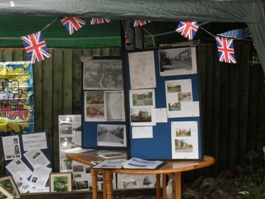
During August we have concentrated our efforts on completing the book about Three Mile Cross Chapel and it is almost finished. It is subject to a review at present. Some research has been undertaken about non-conformity locally and the following is a short summary of those findings.

Prior to The Dissenters Act of 1852, all non-conformists from the Church of England, excluding Papists were required by law to licence any premises where more than five gathered to worship. The fee for this was 2 shillings and 6 pence (12.5p) and obtained from the diocese in which the premises stood or from the Court of Quarter Sessions. After civil registration for births, marriages and deaths came in, from 1837, the registering for licences was also made by the civil authority as per the act above. There were many churches licensed locally from 1772, in Shinfield at Lee Common, in the premises of Steven Sayer and the application was signed by William Hacker, William Church, John Hawkins, Richard Dulley (Senior and Junior), James Simmonds, and Edward Shepherd.
Another licence was issued in 1815, for premises near to the four mile stone on Spencers Wood Common and signed by George Bailey, Martha Drew, E Bailey, Sophie Drew, John Carter and Elizabeth Drew. John Carter also, requested a licence from the Salisbury Diocese, for a chapel in 1814, at Beach(sic) Hill, Wilts at Clappers Farm. There had been an earlier request, in 1794, for a chapel at Beech Hill. Between 1815 and 1817, Richard Body requested 3 licences for Shinfield.
There were many requests for chapels in Swallowfield, spelt on one occasion, Swallerfield and included Riseley. These occurred in 1798, 1799, 1812, 1817, 1821, 1832, 1833, 1835 and 1848 and most of these were in Wiltshire. There were many different religious groups such as, Wesleyan Methodists, Primitive Methodists, Presbyterians, Quakers, Baptists with differing branches, Independents, Congregationalists, Countess of Huntindon’s Connexion and Plymouth Brethren, also with branches. The Methodists were encouraged in using the Church of England churches as well as their own but were evangelical, particularly after Wesley’s death when they began to ordain its own clergy. The Connexion bit above also relates to being in connection with Wesley. The Primitive Methodists didn’t always register their churches as most were conducted out of doors and the Independents had the alternative name of Tent Methodists.
Margaret Bampton.